

The guidelines for what constitutes a “good” proprietary ratio are industry-specific and are also affected by the company’s fundamentals. Of course, the ratio is inadequate to understand the fundamentals of a company and should be evaluated in conjunction with other metrics. cash flow Suppose a proprietor company has a liability of $1500, and owner equity is $2000. Calculation of Balance sheet, i.e., Total asset of a company will sum of liability and equity.
How does accurate equity calculation affect financial analysis?
Liabilities are obligations that the company owes to external parties, such as loans, accounts payable, and accrued expenses. Equity represents the residual claim on assets after satisfying liabilities. A company can pay for something by either taking on debt (i.e., liabilities) or paying for it with money it owns (i.e., equity). Therefore, the equation reflects the principle that all of a company’s resources (assets) can be paid in one of those two ways. Venture capitalists (VCs) provide most private equity financing in return for an early minority stake.
Step-by-Step Guide to Fibonacci Extensions in Stock Analysis
Knowing the difference between current and non-current assets is crucial. It affects how we view a company’s liquidity and overall financial health. Negative equity suggests a company might struggle to meet its debts, a concern Apple has avoided according to their reports. It represents the essence of a company’s financial well-being and attractiveness. No, working capital is a separate measure, focused on a company’s short-term assets and liabilities.

Established Business Equity
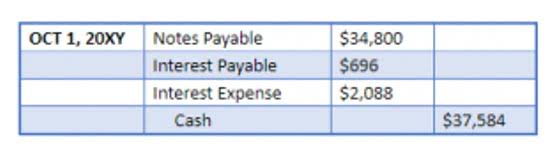
For instance, increasing your stake in an investee requires adjusting the investment account and recognizing a proportional share of earnings. Understanding the equity accounting formula is essential for investors because it helps them evaluate the true value AI in Accounting of their investments. Accurate financial reporting is vital for maintaining investor trust and guaranteeing sound decision-making.

- Total Liabilities and Equity represents the sum of a company’s financial obligations (liabilities) and the owners’ claims (equity) on its assets.
- We’ll now move on to a modeling exercise, which you can access by filling out the form below.
- Negative equity is often a sign of financial distress and can indicate the company’s inability to meet its financial obligations.
- While not a regular occurrence, it is possible for a company to have a negative D/E ratio, which means the company’s shareholders’ equity balance has turned negative.
- Think of retained earnings as savings because it represents a cumulative total of profits that have been saved and put aside or retained for future use.
- Retained earnings represent the cumulative net income of a corporation that has been retained rather than distributed to shareholders as dividends.
With a track record of profitability and strong free cash flow)—as debt financing becomes more readily available and “cheaper” for such borrowers with less credit risk. The Equity Value is the total value of a company’s stock issuances attributable to only common total equity formula shareholders, as of the latest market close. Changes in ownership affect equity adjustments, impacting your financial statements.
Practical Application Steps
A Debt-to-Equity ratio of 2.0, for instance, means the company relies on $2 of debt for every $1 of equity capital. Creditors generally prefer a lower ratio, as it implies a larger equity buffer to protect their loans. This ratio is a primary indicator of long-term solvency and risk exposure.
How to calculate holding period return
- Thus, the equity in the property is (roughly) the $300,000 you own of the building.
- However, a low D/E ratio is not necessarily a positive sign, as the company could be relying too much on equity financing, which is costlier than debt.
- It also helps in making smart financial plans and investment choices.
- This financial metric is typically listed on a company’s balance sheet and is commonly used by analysts to determine the company’s overall fiscal health.
- It’s a tool that fuels informed decisions, whether you’re evaluating business health, preparing reports, or shaping financial strategy.
- This comprehensive understanding not only aids in making informed investment decisions but also aligns with regulatory compliance, ultimately fostering transparency and enhancing stakeholder trust.
Understanding equity value is vital for investors and financial analysts. It tells them about a company’s ability to pay off debts and its investment potential. For Apple, their shareholders’ equity rose to $73.812 billion, indicating strong growth and financial stability. Yes, if a company’s liabilities exceed its assets, it could have negative total capital, which signals financial distress. This is often the case for businesses in bankruptcy or severe financial trouble. Total capital is an important indicator of a company’s ability to finance its operations and investments without solely relying on external funding or excessive borrowing.
